Facebook
 X
X
 Pinterest
 Copy Link
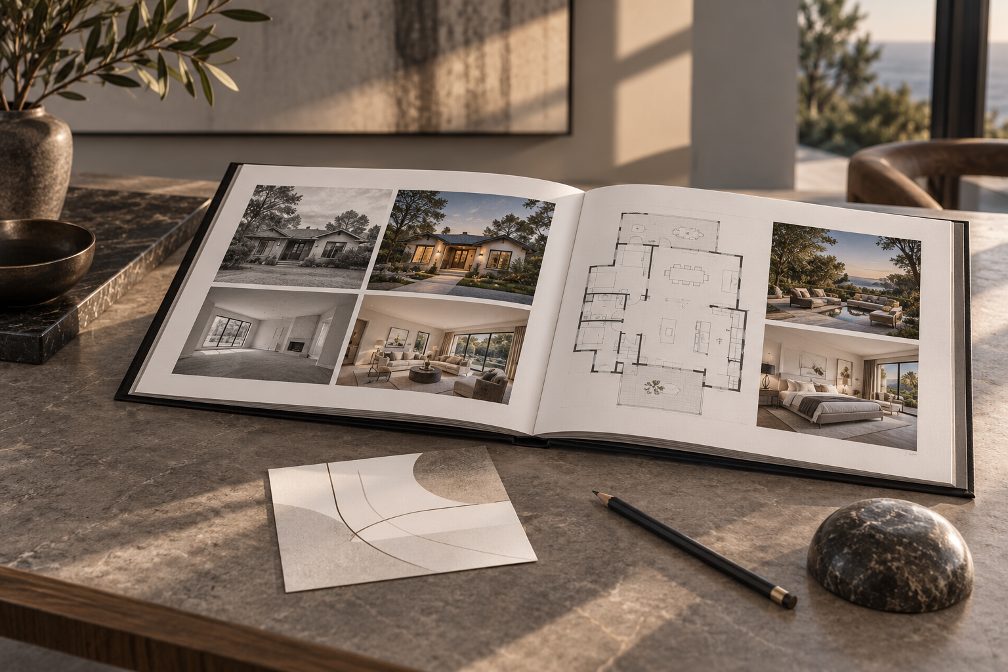
The Luxury Case Study
A luxury real estate case study turns completed work into useful proof. It shows how an agent studied a challenge, made decisions, executed a plan, and responded to the market.
That is more valuable than announcing a sale alone. Future clients want to understand how you think. A well-built case study makes that judgment visible without revealing private client information.
A Luxury Real Estate Case Study Is Not a Victory Lap
A case study should educate rather than boast. The property provides context, but the strategy should remain the main subject.
Begin with the challenge. Perhaps the home needed stronger positioning, a careful privacy plan, wider agent outreach, or a clearer explanation of an unusual feature. Then show how the work addressed that challenge.
The result matters. However, the process gives another client a reason to trust you.
Document the Work While It Is Happening
Do not wait until closing to reconstruct every decision. Instead, create a simple case-study folder when the assignment begins.
Save the original property condition, research notes, approved marketing strategy, creative brief, launch assets, meaningful feedback patterns, adjustments, and final outcome. Also record why major decisions were made.
This habit improves your current work because it creates accountability. In addition, it gives you accurate material later.
Use a Five-Part Structure
A clear luxury real estate case study can follow five sections.
- Context: Describe the property and market without exposing private details.
- Challenge: Explain the decision or obstacle that required strategy.
- Approach: Show the research, preparation, positioning, and execution.
- Adjustment: Describe what the market taught you and how you responded.
- Outcome: Share the result using only facts you can verify and disclose.
Keep each section focused. The reader should understand both the action and the reason behind it.
Choose Evidence That Shows Judgment
Beautiful photography may attract attention, yet it does not prove the full value of the agent. Pair visuals with evidence of thought.
You might include a short positioning statement, a sample from the creative brief, a revised image sequence, an event plan, or an anonymized feedback summary. Before-and-after materials can also show how the campaign became clearer.
This approach connects naturally with a strong
luxury property marketing narrative. The case study can show how the central idea guided the campaign.
Protect the Client and the Property
Permission and discretion come first. Therefore, confirm what the client allows you to share. Then remove names, schedules, security details, access instructions, financial information, and sensitive correspondence.
If the property itself may identify the client, limit the details or wait until public records and the client’s wishes allow appropriate use. Also avoid screenshots that reveal contact information or private messages.
The same standards discussed in
Luxury Real Estate Risk Management should continue after closing.
When in doubt, use less detail. A credible case study does not require confidential information.
Write About Decisions, Not Just Deliverables
A list of photography, video, print, and digital advertising describes activity. It does not explain strategy.
For each major deliverable, answer three questions: Why did we choose it? What did it need to communicate? How did the response shape the next decision?
For example: “The property offered excellent privacy, but the original imagery made it feel isolated. We changed the image order and added location context. As a result, agents could understand both privacy and access.”
That explanation demonstrates judgment in plain language.
Use the Case Study in More Than One Place
One case study can support several business-development conversations. Create a full version for your website or listing presentation. Then adapt one lesson for LinkedIn, an email, a training conversation, or a seller follow-up.
You might also create a one-page version for appointments. Lead with the challenge and strategy rather than the sale price. Finally, keep a private version with more detail for your own review and coaching.
Reuse the lesson, not the same wording everywhere. Each format should serve its reader.
Choose the Right Story for the Next Opportunity
The most impressive case study is not always the most relevant. Match the example to the client’s concern.
A privacy-sensitive seller needs evidence of discretion. An owner of a unique home may value a positioning example. Someone whose listing failed may want to see how you diagnosed and changed a campaign.
Therefore, organize case studies by challenge, property type, and client priority. This makes the right proof easier to find.
Create a Repeatable Review After Closing
Within two weeks of closing, hold a short review. Ask what worked, what changed, what surprised you, and what you would do differently. Then gather the approved assets and write the first draft while the details remain fresh.
Do not wait for a perfect transaction. A useful case study can include a challenge or correction. In fact, thoughtful adaptation often reveals more skill than a campaign that faced no resistance.
Proof Builds Authority Over Time
A luxury real estate case study helps agents move from saying they offer strategy to showing it. Each completed assignment can become part of a growing body of work.
Over time, those examples strengthen listing presentations, referral conversations, professional education, and online authority. More importantly, they encourage the agent to study and improve the work itself.
Turn Your Work Into Credible Proof
If you want to build stronger case studies from your luxury work, Contact me. I help agents apply luxury education, organize their strategy, and use professional development and marketing resources to grow with confidence.